Question
refers to a conceptual representation that is used to explain the communication process.
Question
general types of communication
Question
presents communication as a one-way activity.
Question
shows communication as a two-way activity
Question
presents communication not only as a two-way process but also as a simultaneous activity
Question
models of communication
Question
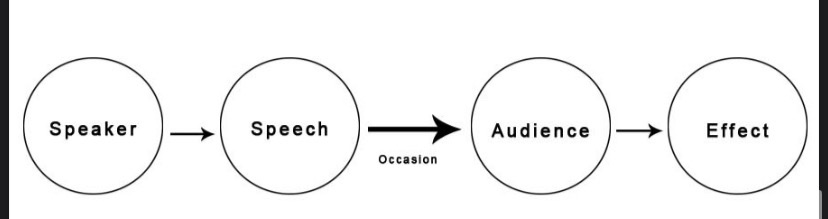
Stresses the importance of the audience Focuses on public speaking rather than interpersonal communication. Five elements: speaker, speech, occasion, audience, and effect.
Question
Designed to develop effective communication between the sender and the receiver. In this model, “Noise is an important factor. Consists of five elements: Information source, transmitter, channel, receiver, destination, and noise.
Question
shannon weaver is also known as
Lesson 2 - Models of Communication
 TestMaker
Score
0 / 10
Correct rate
0%
Correct: 0
Incorrect: 0
Unanswered: 10
AP module 1 - 2

AP module 1 - 2
Someone_ 98 · 36 questions · 3 y agoAP module 1 - 2
AP module 1 - 2
36 questions • 3 y agoTLE Chapter 1-3
TLE Chapter 1-3
Someone_ 98 · 43 questions · 3 y agoTLE Chapter 1-3
TLE Chapter 1-3
43 questions • 3 y agoAP Modyul 4-7
AP Modyul 4-7
Someone_ 98 · 18 questions · 3 y agoAP Modyul 4-7
AP Modyul 4-7
18 questions • 3 y agoMapeh
Mapeh
Someone_ 98 · 39 questions · 3 y agoMapeh
Mapeh
39 questions • 3 y agoTLE chapter 4-5
TLE chapter 4-5
Someone_ 98 · 43 questions · 3 y agoTLE chapter 4-5
TLE chapter 4-5
43 questions • 3 y agoScience Quiz Bee
Science Quiz Bee
Someone_ 98 · 93 questions · 3 y agoScience Quiz Bee
Science Quiz Bee
93 questions • 3 y agoAP Modyul 8-9
AP Modyul 8-9
Someone_ 98 · 31 questions · 3 y agoAP Modyul 8-9
AP Modyul 8-9
31 questions • 3 y agomapeh
mapeh
Someone_ 98 · 38 questions · 3 y agomapeh
mapeh
38 questions • 3 y agoTLE Bartending
TLE Bartending
Someone_ 98 · 65 questions · 3 y agoTLE Bartending
TLE Bartending
65 questions • 3 y agoAP Buwis, Migrasyon, OFW
AP Buwis, Migrasyon, OFW
Someone_ 98 · 50 questions · 2 y agoAP Buwis, Migrasyon, OFW
AP Buwis, Migrasyon, OFW
50 questions • 2 y agoTLE Flairetending
TLE Flairetending
Someone_ 98 · 41 questions · 2 y agoTLE Flairetending
TLE Flairetending
41 questions • 2 y agoScience
Science
Someone_ 98 · 41 questions · 2 y agoScience
Science
41 questions • 2 y agoFilipino
Filipino
Someone_ 98 · 6 questions · 2 y agoFilipino
Filipino
6 questions • 2 y agoResearch (Methodology, Sampling)
Research (Methodology, Sampling)
Someone_ 98 · 26 questions · 2 y agoResearch (Methodology, Sampling)
Research (Methodology, Sampling)
26 questions • 2 y agoAP Karapatang pantao
AP Karapatang pantao
Someone_ 98 · 18 questions · 2 y agoAP Karapatang pantao
AP Karapatang pantao
18 questions • 2 y agoFilipino Mitohiya Mula Sa Africa
Filipino Mitohiya Mula Sa Africa
Someone_ 98 · 47 questions · 2 y agoFilipino Mitohiya Mula Sa Africa
Filipino Mitohiya Mula Sa Africa
47 questions • 2 y agoScience 3rd Qtr Monthly
Science 3rd Qtr Monthly
Someone_ 98 · 27 questions · 2 y agoScience 3rd Qtr Monthly
Science 3rd Qtr Monthly
27 questions • 2 y agomapeh 3rd qtr monthly
mapeh 3rd qtr monthly
Someone_ 98 · 36 questions · 2 y agomapeh 3rd qtr monthly
mapeh 3rd qtr monthly
36 questions • 2 y agoTLE Catering
TLE Catering
Someone_ 98 · 52 questions · 2 y agoTLE Catering
TLE Catering
52 questions • 2 y agoCarering tools and equipment
Carering tools and equipment
Someone_ 98 · 22 questions · 2 y agoCarering tools and equipment
Carering tools and equipment
22 questions • 2 y agoTalambuhay
Talambuhay
Someone_ 98 · 10 questions · 2 y agoTalambuhay
Talambuhay
10 questions • 2 y agoTLE PURCHASING ANDPREPARING INGREDIENTSACCORDING TO RECIPE
TLE PURCHASING ANDPREPARING INGREDIENTSACCORDING TO RECIPE
Someone_ 98 · 89 questions · 2 y agoTLE PURCHASING ANDPREPARING INGREDIENTSACCORDING TO RECIPE
TLE PURCHASING ANDPREPARING INGREDIENTSACCORDING TO RECIPE
89 questions • 2 y agosemi finals
semi finals
Someone_ 98 · 11 questions · 2 y agosemi finals
semi finals
11 questions • 2 y agoFlower arrangementss
Flower arrangementss
Someone_ 98 · 28 questions · 2 y agoFlower arrangementss
Flower arrangementss
28 questions • 2 y agoGas Laws, Biomolecules
Gas Laws, Biomolecules
Someone_ 98 · 36 questions · 2 y agoGas Laws, Biomolecules
Gas Laws, Biomolecules
36 questions • 2 y agoLesson 1 Information and Communications Technology
Lesson 1 Information and Communications Technology
Someone_ 98 · 47 questions · 2 y agoLesson 1 Information and Communications Technology
Lesson 1 Information and Communications Technology
47 questions • 2 y agoLesson 1 Origin of the universe
Lesson 1 Origin of the universe
Someone_ 98 · 31 questions · 2 y agoLesson 1 Origin of the universe
Lesson 1 Origin of the universe
31 questions • 2 y agoKonseptong Pangwika
Konseptong Pangwika
Someone_ 98 · 27 questions · 2 y agoKonseptong Pangwika
Konseptong Pangwika
27 questions • 2 y agoLesson 2 - ICT as a Platform for Social Change
Lesson 2 - ICT as a Platform for Social Change
Someone_ 98 · 33 questions · 2 y agoLesson 2 - ICT as a Platform for Social Change
Lesson 2 - ICT as a Platform for Social Change
33 questions • 2 y agoLesson 3 - Developing an ICT Project for Social Change
Lesson 3 - Developing an ICT Project for Social Change
Someone_ 98 · 11 questions · 2 y agoLesson 3 - Developing an ICT Project for Social Change
Lesson 3 - Developing an ICT Project for Social Change
11 questions • 2 y agoLesson 4 - Contextualized Online Search
Lesson 4 - Contextualized Online Search
Someone_ 98 · 40 questions · 2 y agoLesson 4 - Contextualized Online Search
Lesson 4 - Contextualized Online Search
40 questions • 2 y agoLesson 5 Online Security and Safety
Lesson 5 Online Security and Safety
Someone_ 98 · 23 questions · 2 y agoLesson 5 Online Security and Safety
Lesson 5 Online Security and Safety
23 questions • 2 y agoLesson 2 - Subsystems
Lesson 2 - Subsystems
Someone_ 98 · 25 questions · 2 y agoLesson 2 - Subsystems
Lesson 2 - Subsystems
25 questions • 2 y agoLesson 3 - Minerals And Rocks
Lesson 3 - Minerals And Rocks
Someone_ 98 · 60 questions · 2 y agoLesson 3 - Minerals And Rocks
Lesson 3 - Minerals And Rocks
60 questions • 2 y agoLesson 4 - IMPORTANT MINERALS TO SOCIETY
Lesson 4 - IMPORTANT MINERALS TO SOCIETY
Someone_ 98 · 22 questions · 2 y agoLesson 4 - IMPORTANT MINERALS TO SOCIETY
Lesson 4 - IMPORTANT MINERALS TO SOCIETY
22 questions • 2 y agoLesson 4 - Ore Minerals
Lesson 4 - Ore Minerals
Someone_ 98 · 18 questions · 2 y agoLesson 4 - Ore Minerals
Lesson 4 - Ore Minerals
18 questions • 2 y agoLesson 1 - Major Gentes of Literature
Lesson 1 - Major Gentes of Literature
Someone_ 98 · 22 questions · 2 y agoLesson 1 - Major Gentes of Literature
Lesson 1 - Major Gentes of Literature
22 questions • 2 y agoLesson 2 -Elements of literature
Lesson 2 -Elements of literature
Someone_ 98 · 21 questions · 2 y agoLesson 2 -Elements of literature
Lesson 2 -Elements of literature
21 questions • 2 y agoDrama Fiction, and Creative NonFiction
Drama Fiction, and Creative NonFiction
Someone_ 98 · 21 questions · 2 y agoDrama Fiction, and Creative NonFiction
Drama Fiction, and Creative NonFiction
21 questions • 2 y agoLesson 3 - Philippine Literary Period - PreColonial
Lesson 3 - Philippine Literary Period - PreColonial
Someone_ 98 · 16 questions · 2 y agoLesson 3 - Philippine Literary Period - PreColonial
Lesson 3 - Philippine Literary Period - PreColonial
16 questions • 2 y agoLesson 3 - Philippine Literary Period - Spanish Period
Lesson 3 - Philippine Literary Period - Spanish Period
Someone_ 98 · 26 questions · 2 y agoLesson 3 - Philippine Literary Period - Spanish Period
Lesson 3 - Philippine Literary Period - Spanish Period
26 questions • 2 y agoLesson 3 - Philippine Literary Period - American Period
Lesson 3 - Philippine Literary Period - American Period
Someone_ 98 · 8 questions · 2 y agoLesson 3 - Philippine Literary Period - American Period
Lesson 3 - Philippine Literary Period - American Period
8 questions • 2 y agoLesson 3 - Philippine Literary Period - Japanese and Post War
Lesson 3 - Philippine Literary Period - Japanese and Post War
Someone_ 98 · 20 questions · 2 y agoLesson 3 - Philippine Literary Period - Japanese and Post War
Lesson 3 - Philippine Literary Period - Japanese and Post War
20 questions • 2 y agoLesson 3 - Philippine Literary Periods - Contemporary
Lesson 3 - Philippine Literary Periods - Contemporary
Someone_ 98 · 12 questions · 2 y agoLesson 3 - Philippine Literary Periods - Contemporary
Lesson 3 - Philippine Literary Periods - Contemporary
12 questions • 2 y agoLesson 1 - Nature, Elements, and Process of Communication
Lesson 1 - Nature, Elements, and Process of Communication
Someone_ 98 · 25 questions · 2 y agoLesson 1 - Nature, Elements, and Process of Communication
Lesson 1 - Nature, Elements, and Process of Communication
25 questions • 2 y agoLesson 3 - Verbal and Nonverbal Communication
Lesson 3 - Verbal and Nonverbal Communication
Someone_ 98 · 9 questions · 2 y agoLesson 3 - Verbal and Nonverbal Communication
Lesson 3 - Verbal and Nonverbal Communication
9 questions • 2 y agoLesson 4 - Intercultural Communication
Lesson 4 - Intercultural Communication
Someone_ 98 · 7 questions · 2 y agoLesson 4 - Intercultural Communication
Lesson 4 - Intercultural Communication
7 questions • 2 y agoLesson 1 Academic Text in Various Disciplines
Lesson 1 Academic Text in Various Disciplines
Someone_ 98 · 24 questions · 2 y agoLesson 1 Academic Text in Various Disciplines
Lesson 1 Academic Text in Various Disciplines
24 questions • 2 y agoLesson 2 - Academic Writing Conventions
Lesson 2 - Academic Writing Conventions
Someone_ 98 · 6 questions · 2 y agoLesson 2 - Academic Writing Conventions
Lesson 2 - Academic Writing Conventions
6 questions • 2 y agoLesson 3 - Reading Techniques
Lesson 3 - Reading Techniques
Someone_ 98 · 23 questions · 2 y agoLesson 3 - Reading Techniques
Lesson 3 - Reading Techniques
23 questions • 2 y agoLesson 4 - How to write a thesis statement
Lesson 4 - How to write a thesis statement
Someone_ 98 · 11 questions · 2 y agoLesson 4 - How to write a thesis statement
Lesson 4 - How to write a thesis statement
11 questions • 2 y agoLesson 1 - Properties of a Well Written Text
Lesson 1 - Properties of a Well Written Text
Someone_ 98 · 25 questions · 2 y agoLesson 1 - Properties of a Well Written Text
Lesson 1 - Properties of a Well Written Text
25 questions • 2 y agoLesson 2 - Patterns of Development in Writing
Lesson 2 - Patterns of Development in Writing
Someone_ 98 · 10 questions · 2 y agoLesson 2 - Patterns of Development in Writing
Lesson 2 - Patterns of Development in Writing
10 questions • 2 y agoLesson 2 - Teorya ng Wika
Lesson 2 - Teorya ng Wika
Someone_ 98 · 8 questions · 2 y agoLesson 2 - Teorya ng Wika
Lesson 2 - Teorya ng Wika
8 questions • 2 y agoLesson 3 - Kasaysayan ng Wikang Pambansa
Lesson 3 - Kasaysayan ng Wikang Pambansa
Someone_ 98 · 26 questions · 2 y agoLesson 3 - Kasaysayan ng Wikang Pambansa
Lesson 3 - Kasaysayan ng Wikang Pambansa
26 questions • 2 y agoLesson 4 - Kasaysayan ng Wikang Pambansa (Ikalawang Bahagi)
Lesson 4 - Kasaysayan ng Wikang Pambansa (Ikalawang Bahagi)
Someone_ 98 · 29 questions · 2 y agoLesson 4 - Kasaysayan ng Wikang Pambansa (Ikalawang Bahagi)
Lesson 4 - Kasaysayan ng Wikang Pambansa (Ikalawang Bahagi)
29 questions • 2 y agoLesson 5 - Exogenic Processes
Lesson 5 - Exogenic Processes
Someone_ 98 · 29 questions · 2 y agoLesson 5 - Exogenic Processes
Lesson 5 - Exogenic Processes
29 questions • 2 y agoLesson 6 - Endogenic Processes
Lesson 6 - Endogenic Processes
Someone_ 98 · 14 questions · 2 y agoLesson 6 - Endogenic Processes
Lesson 6 - Endogenic Processes
14 questions • 2 y agoLesson 7&8 - TECTONIC PROCESSES
Lesson 7&8 - TECTONIC PROCESSES
Someone_ 98 · 24 questions · 2 y agoLesson 7&8 - TECTONIC PROCESSES
Lesson 7&8 - TECTONIC PROCESSES
24 questions • 2 y agoLesson 9&10 - How Layers of Rocks Form
Lesson 9&10 - How Layers of Rocks Form
Someone_ 98 · 26 questions · 2 y agoLesson 9&10 - How Layers of Rocks Form
Lesson 9&10 - How Layers of Rocks Form
26 questions • 2 y agoLesson 5 - Monolingguwalismo, Bilingguwalismo, at Multilingguwalismo
Lesson 5 - Monolingguwalismo, Bilingguwalismo, at Multilingguwalismo
Someone_ 98 · 12 questions · 2 y agoLesson 5 - Monolingguwalismo, Bilingguwalismo, at Multilingguwalismo
Lesson 5 - Monolingguwalismo, Bilingguwalismo, at Multilingguwalismo
12 questions • 2 y agoLesson 6 - Barayti ng Wika
Lesson 6 - Barayti ng Wika
Someone_ 98 · 15 questions · 2 y agoLesson 6 - Barayti ng Wika
Lesson 6 - Barayti ng Wika
15 questions • 2 y agoLesson 7 - Gamit ng Wika sa Lipunan
Lesson 7 - Gamit ng Wika sa Lipunan
Someone_ 98 · 17 questions · 2 y agoLesson 7 - Gamit ng Wika sa Lipunan
Lesson 7 - Gamit ng Wika sa Lipunan
17 questions • 2 y agoLesson 4 - Philippine Literature from The Regions
Lesson 4 - Philippine Literature from The Regions
Someone_ 98 · 9 questions · 2 y agoLesson 4 - Philippine Literature from The Regions
Lesson 4 - Philippine Literature from The Regions
9 questions • 2 y agoLesson 5 - Philippine National Artists in Literature
Lesson 5 - Philippine National Artists in Literature
Someone_ 98 · 6 questions · 2 y agoLesson 5 - Philippine National Artists in Literature
Lesson 5 - Philippine National Artists in Literature
6 questions • 2 y agoLesson 5 - Sumamrizing, Paraphrasing, Quoting, and Citing
Lesson 5 - Sumamrizing, Paraphrasing, Quoting, and Citing
Someone_ 98 · 18 questions · 2 y agoLesson 5 - Sumamrizing, Paraphrasing, Quoting, and Citing
Lesson 5 - Sumamrizing, Paraphrasing, Quoting, and Citing
18 questions • 2 y agoLesson 4 - Patterns of Development
Lesson 4 - Patterns of Development
Someone_ 98 · 14 questions · 2 y agoLesson 4 - Patterns of Development
Lesson 4 - Patterns of Development
14 questions • 2 y agoLesson 8 - Context of Text Development
Lesson 8 - Context of Text Development
Someone_ 98 · 14 questions · 2 y agoLesson 8 - Context of Text Development
Lesson 8 - Context of Text Development
14 questions • 2 y agoLesson 6 - Reaction Paper
Lesson 6 - Reaction Paper
Someone_ 98 · 6 questions · 2 y agoLesson 6 - Reaction Paper
Lesson 6 - Reaction Paper
6 questions • 2 y agoLesson 6 - Collaborative Development of ICT
Lesson 6 - Collaborative Development of ICT
Someone_ 98 · 29 questions · 2 y agoLesson 6 - Collaborative Development of ICT
Lesson 6 - Collaborative Development of ICT
29 questions • 2 y agoLesson 5 - Speech Context
Lesson 5 - Speech Context
Someone_ 98 · 22 questions · 2 y agoLesson 5 - Speech Context
Lesson 5 - Speech Context
22 questions • 2 y agoLesson 7 - Speech Acts
Lesson 7 - Speech Acts
Someone_ 98 · 10 questions · 2 y agoLesson 7 - Speech Acts
Lesson 7 - Speech Acts
10 questions • 2 y agoSitwasyong Pangwika
Sitwasyong Pangwika
Someone_ 98 · 26 questions · 2 y agoSitwasyong Pangwika
Sitwasyong Pangwika
26 questions • 2 y agoClaims
Claims
Someone_ 98 · 10 questions · 2 y agoClaims
Claims
10 questions • 2 y agoDetermining Textual Evidence
Determining Textual Evidence
Someone_ 98 · 17 questions · 2 y agoDetermining Textual Evidence
Determining Textual Evidence
17 questions • 2 y agoProfessional Correspondence - Business Letter
Professional Correspondence - Business Letter
Someone_ 98 · 31 questions · 2 y agoProfessional Correspondence - Business Letter
Professional Correspondence - Business Letter
31 questions • 2 y agoCommunicative Strategies
Communicative Strategies
Someone_ 98 · 12 questions · 1 y agoCommunicative Strategies
Communicative Strategies
12 questions • 1 y agoTypes of Speech According to Purpose
Types of Speech According to Purpose
Someone_ 98 · 12 questions · 1 y agoTypes of Speech According to Purpose
Types of Speech According to Purpose
12 questions • 1 y agoSimple Interest
Simple Interest
Someone_ 98 · 8 questions · 1 y agoSimple Interest
Simple Interest
8 questions • 1 y agoCompound Interest
Compound Interest
Someone_ 98 · 13 questions · 1 y agoCompound Interest
Compound Interest
13 questions • 1 y agoSimple Annuity
Simple Annuity
Someone_ 98 · 11 questions · 1 y agoSimple Annuity
Simple Annuity
11 questions • 1 y agoFigures of Speech
Figures of Speech
Someone_ 98 · 16 questions · 1 y agoFigures of Speech
Figures of Speech
16 questions • 1 y agoLiterary Analysis
Literary Analysis
Someone_ 98 · 36 questions · 1 y agoLiterary Analysis
Literary Analysis
36 questions • 1 y agoWorld Lit
World Lit
Someone_ 98 · 28 questions · 1 y agoWorld Lit
World Lit
28 questions • 1 y agoTypes kf Speech According to Delievery
Types kf Speech According to Delievery
Someone_ 98 · 9 questions · 1 y agoTypes kf Speech According to Delievery
Types kf Speech According to Delievery
9 questions • 1 y agoConcept Paper
Concept Paper
Someone_ 98 · 17 questions · 1 y agoConcept Paper
Concept Paper
17 questions • 1 y agoPosition Paper
Position Paper
Someone_ 98 · 9 questions · 1 y agoPosition Paper
Position Paper
9 questions • 1 y agoLogical Fallacies and Types of Appeal
Logical Fallacies and Types of Appeal
Someone_ 98 · 25 questions · 1 y agoLogical Fallacies and Types of Appeal
Logical Fallacies and Types of Appeal
25 questions • 1 y agoRenewable and Nonrenewable Resources
Renewable and Nonrenewable Resources
Someone_ 98 · 34 questions · 1 y agoRenewable and Nonrenewable Resources
Renewable and Nonrenewable Resources
34 questions • 1 y agoWater Resources
Water Resources
Someone_ 98 · 33 questions · 1 y agoWater Resources
Water Resources
33 questions • 1 y agoSoil Resources
Soil Resources
Someone_ 98 · 25 questions · 1 y agoSoil Resources
Soil Resources
25 questions • 1 y agoQuestion list
1
refers to a conceptual representation that is used to explain the communication process.model of communication
2
general types of communicationlinear
3
presents communication as a one-way activity.linear
4
shows communication as a two-way activityinteractive
5
presents communication not only as a two-way process but also as a simultaneous activitytransactional
6
models of communicationaristotle
7
Stresses the importance of the audience Focuses on public speaking rather than interpersonal communication. Five elements: speaker, speech, occasion, audience, and effect.aristotle’s model of communication
8
Designed to develop effective communication between the sender and the receiver. In this model, “Noise is an important factor. Consists of five elements: Information source, transmitter, channel, receiver, destination, and noise.shannon weaver’s model of communication
9
shannon weaver is also known asthe mathematical theory of communication
10
aristotles
11
shannon weaver’s
12
emphasized that both the sender and the receiver take turns in playing the role of encoder and decoder. Communication can take place only when there is somehow a commonality in the field of experience of both the source and destination. Stresses the importance of encoding and decoding processes.schramm’s
13
For the communication to transpire the communicators should demonstrate: the same level in terms of communication skills knowledge about the topic attitude toward the same subject familiarity with the social system as well as the culture of each other.berlo’s moc
14
schramms
15
berlos
16
The process of communication evolves from the very birth of an individual and continues for as long as he lives. Communication is supposed to be continuous and non-repetitive. It is always growing, accumulative, and moving forward.helical model
17
helical model
18
Berlos MOC is also calledSENDER MESSAGE CHANNEL RECEIVER
19
Model that is focused on sender, message, channel, and receiverSMCR BERLO
20
Most appropriate model for the process of linear communication which it has a one-way flowShannon-Weaver’s Model Of Communication
21
Explains dynamics, multiple voices impact the clarity of exchangeBarnulds