Question
When should turns at low altitudes above villages be avoided with regard to noise abandonment procedures
Question
During an approach, the aeroplane experience a windshear with a decreasing headwind. If the pilot does not make any corrections, how do the approach path and the true airspeed change
Question
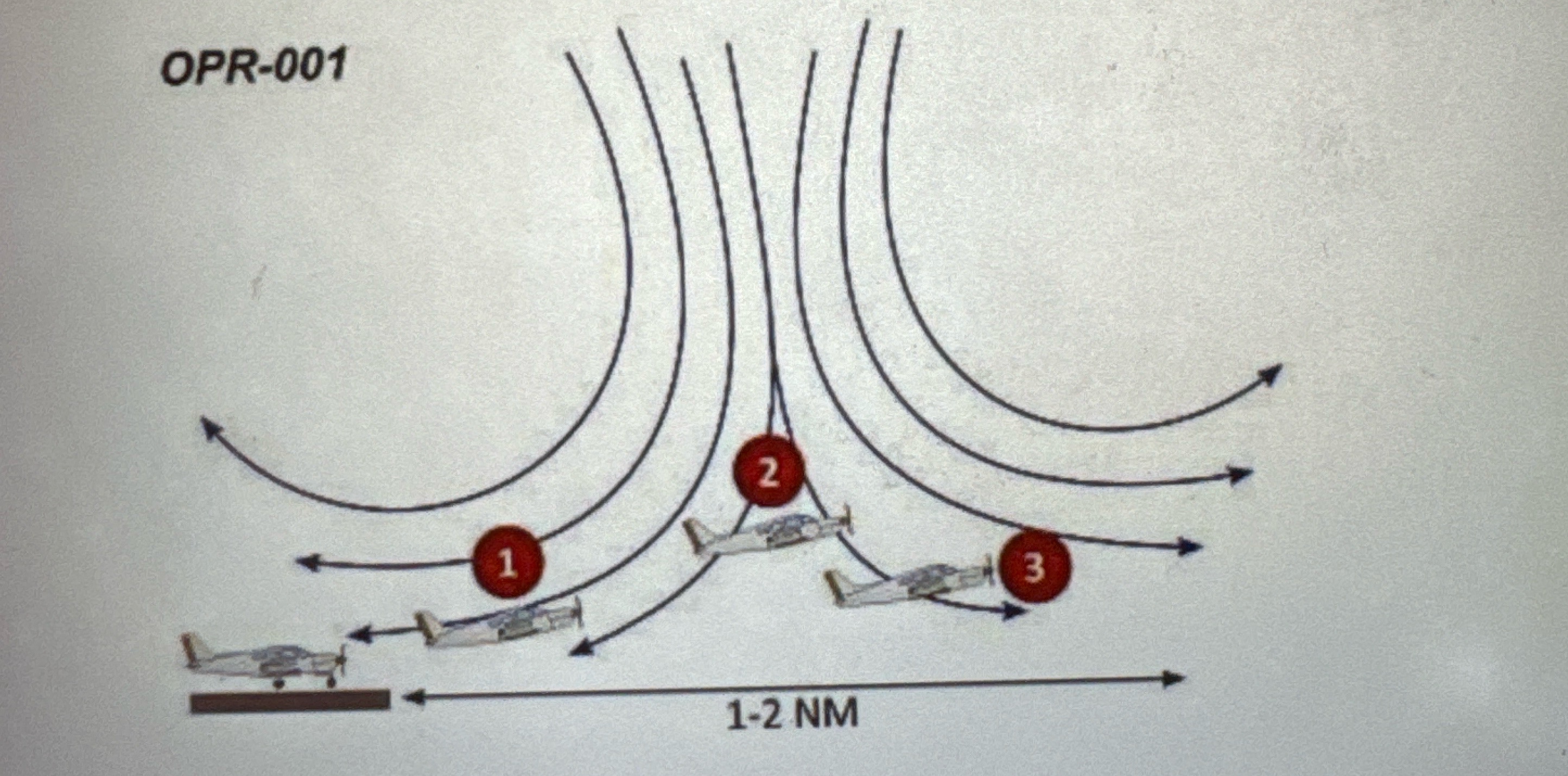
Which phenomenon may be expected at point 2 of the microburst
Question
What action should be taken when entering a windshear? 1.reduce speed 2.retract gear and flaps 3.maintain current configuration 4.adjust thrust
Question
Wake turbulence develop during takeoff just as the aeroplane
Question
Wake turbulence is particularly strong
Question
What needs to be observed in conjunction with overheated breakes
Question
What danger does standing water on the runway pose to the aircraft
Question
How can the pilot of an engine driven aircraft minimise the noise emission during descent and approach
Question
A light aircraft intends to land behind a commercial airliner belonging to wake turbulence category medium or heavy on a long runway.how can the wake turbulence of the commercial aircraft be avoided
operational procedures 1
 TestMaker
Score
0 / 10
Correct rate
0%
Correct: 0
Incorrect: 0
Unanswered: 10
Question list
1
When should turns at low altitudes above villages be avoided with regard to noise abandonment proceduresin climb
2
During an approach, the aeroplane experience a windshear with a decreasing headwind. If the pilot does not make any corrections, how do the approach path and the true airspeed changepath is lower true air decrease
3
Which phenomenon may be expected at point 2 of the microburstdecrease of climb rate
4
What action should be taken when entering a windshear? 1.reduce speed 2.retract gear and flaps 3.maintain current configuration 4.adjust thrust3,4
5
Wake turbulence develop during takeoff just as the aeroplanelifts off with the front gear
6
Wake turbulence is particularly strongat a high aeroplane wight
7
What needs to be observed in conjunction with overheated breakesthe affected tyres may burst in axial direction
8
What danger does standing water on the runway pose to the aircraftincreased rolling resistance during takeoff
9
How can the pilot of an engine driven aircraft minimise the noise emission during descent and approachhigh approach with minimum power setting, late descent, late configuration, adherence to established arrival routes
10
A light aircraft intends to land behind a commercial airliner belonging to wake turbulence category medium or heavy on a long runway.how can the wake turbulence of the commercial aircraft be avoidedby making a steep approach and a long landing touching down behind the touchdown point of the airliners nose gear
11
After a precautionary landing the breakers and wheels are very hot. In which way should the pilot approach themfrom the front or back side
12
Wet snow on runway can lead toincreased rolling resistance during take off
13
How should a landing on a contaminated runway be conducted if it proves to be inevitableapproach with the minimum crosswind component possible use maximum flaps touchdown firmly with minimum speed break carefully
14
In flight a little smoke emerges from behind the instrument panel.an engine fire is suspected witch action with respect to the pilot operating manual should be takenturn off the heat
15
Which phenomenon may be expected at point 3 of the microburstdecrease in air speed
16
After lift off a much stronger then expected airspeed rise is experienced during the initial climb phase what may be expected if the aeroplane entered a microbursta decrease in climb rate and air speed
17
What should be observed when taxiing behind a commercial airlinerto avoid Jet blast a minimum distance of 200 m should be maintained
18
In case of an emergency ditching the life vest have to be inflatedafter disembarking the aircraft