Question
Parts of a Volcano
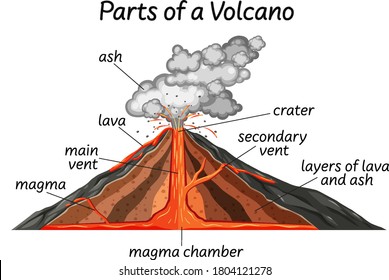
Question
refers to any pheno,enon of eruption of molten lava onto the surface
Question
underground molten rocks forms in the lower part of Earths crust and the upper part of the mantle collected in magma chambers
Question
may be formed when there is a rich source of magma hill, mountain, or fissure from which molten rocks, hot gases, and ash are ejected
Question
volcanoes tend to form where plate boundaries interact and rigid plate molten rock materials from mantle may find their way out as hot plumes, these produce volcanic regions called
Question
magma comes of of the _________, the central opening of a volcano connected to a magma chamber where the heated magma rises from underneath
Question
long narrow cracks in the crust
Question
some of the secondary vents, called ________, emit only gases
Question
neatly circular depression that surrounds the vent
Question
depressions are unusually large and are called _________ form when the summit of a volcano collapses, which occurs when the source of magma is used up
Volcano
 TestMaker
Score
0 / 10
Correct rate
0%
Correct: 0
Incorrect: 0
Unanswered: 10
LESSON 1-2

LESSON 1-2
Hellian · 45 questions · 3 y agoLESSON 1-2
LESSON 1-2
45 questions • 3 y agoLESSON 1
LESSON 1
Hellian · 20 questions · 3 y agoLESSON 1
LESSON 1
20 questions • 3 y agoMAPEH
MAPEH
Hellian · 56 questions · 3 y agoMAPEH
MAPEH
56 questions • 3 y agoFILIPINO
FILIPINO
Hellian · 19 questions · 3 y agoFILIPINO
FILIPINO
19 questions • 3 y agoLESSON 2-3
LESSON 2-3
Hellian · 18 questions · 3 y agoLESSON 2-3
LESSON 2-3
18 questions • 3 y agoLESSON 2-3
LESSON 2-3
Hellian · 28 questions · 3 y agoLESSON 2-3
LESSON 2-3
28 questions • 3 y agoCirculatory System
Circulatory System
Hellian · 17 questions · 3 y agoCirculatory System
Circulatory System
17 questions • 3 y agoRespiratory System
Respiratory System
Hellian · 18 questions · 3 y agoRespiratory System
Respiratory System
18 questions • 3 y agoHeart
Heart
Hellian · 13 questions · 3 y agoHeart
Heart
13 questions • 3 y agoQuarter 1
Quarter 1
Hellian · 18 questions · 3 y agoQuarter 1
Quarter 1
18 questions • 3 y agoLesson 2
Lesson 2
Hellian · 10 questions · 3 y agoLesson 2
Lesson 2
10 questions • 3 y agoQ2 LESSON 1
Q2 LESSON 1
Hellian · 29 questions · 2 y agoQ2 LESSON 1
Q2 LESSON 1
29 questions • 2 y agoDemand
Demand
Hellian · 9 questions · 2 y agoDemand
Demand
9 questions • 2 y agoQ2
Q2
Hellian · 13 questions · 2 y agoQ2
Q2
13 questions • 2 y agoQ3
Q3
Hellian · 23 questions · 2 y agoQ3
Q3
23 questions • 2 y agoClimate and Weather
Climate and Weather
Hellian · 28 questions · 2 y agoClimate and Weather
Climate and Weather
28 questions • 2 y agoQ3 L2
Q3 L2
Hellian · 10 questions · 2 y agoQ3 L2
Q3 L2
10 questions • 2 y agoQuarter 3
Quarter 3
Hellian · 10 questions · 2 y agoQuarter 3
Quarter 3
10 questions • 2 y agoQ3
Q3
Hellian · 10 questions · 2 y agoQ3
Q3
10 questions • 2 y agoQuestion list
1
Parts of a Volcanook
2
refers to any pheno,enon of eruption of molten lava onto the surfacevolcanism
3
underground molten rocks forms in the lower part of Earths crust and the upper part of the mantle collected in magma chambersmagma
4
may be formed when there is a rich source of magma hill, mountain, or fissure from which molten rocks, hot gases, and ash are ejectedvolcano
5
volcanoes tend to form where plate boundaries interact and rigid plate molten rock materials from mantle may find their way out as hot plumes, these produce volcanic regions calledhot spots
6
magma comes of of the _________, the central opening of a volcano connected to a magma chamber where the heated magma rises from underneathvent
7
long narrow cracks in the crustfissures
8
some of the secondary vents, called ________, emit only gasesfumaroles
9
neatly circular depression that surrounds the ventcrater
10
depressions are unusually large and are called _________ form when the summit of a volcano collapses, which occurs when the source of magma is used upcalderas
11
Types of Volcano EruptionPhreatic, Vulcanian, Strombolian, Pelean, Phreatomagmatic, Plinian
12
are driven by steam produced when groundwater is heated due to an underlying heat sourcephreatic
13
release of large quantities of accumulated magmatic gas, ...... forming voluminous cauliflower cloudsvulcanian
14
weak to violent eruptions characterized by lava fountains and outbursts of molten lavastrombolian
15
occurs when gas-rich, pasty lava accumulates to form a dome on the volcano edfice or beneath its surfacepelean
16
result from an ejection of magmatic gases and steam produced by conversion of groundwater to steam by ascending magmaphreatomagmatic
17
volminous ejections of pumice and ash flowsplinian
18
Types of Volcanoescomposite cone, cinder cone, shield volcano
19
(stratovolanoes) produced when viscous lava of andesitic composition flows out over a long timecomposite cone
20
built from ejected lava fragments small, usualky less than 300mcinder cones
21
volcanoes with no known record of eruptioninactive volcanoes
22
Role of PHIVOLCS in Disaster Risk Management PHIVOLCS stands for?philippine institute of volcanology and seismology
23
PAGASA?phillipine atmospheric geophysical and astronomical servises administration
24
SOEPDseismological observation and earthquake prediction division
25
senors are placed on slopes of volcanoesseismic monitoring
26
changws in the electromagnetic field due to the activity of magma are measured using special instrumentsgeophysical technique
27
(PDZ) Circular area around a volcano that is at high risk to major volcanic hazardspermanent danger zone
28
Role of PHIVOLCS 1. predict occurence of volanic eruption and earthquake in PH 2. determine likely to be affected areas 3. generate data to forecast volcanic eruption & earthquake 4. prepare evacuation and plan preparednessok
29
Volcanix Materials and Hazards fast movement of turbulent mass of fragmental volcanic materials with hot gasespyroclastic flow
30
streamlike flow of incandescent, molten rock materials erupted from volcanolava flow
31
shower of fine-to-course-grained volcanic materials airborne products of volcanic eruptionashfall
32
rapid-flowing thick mixture of volcanic material and water, created along river channels by extreme rainfalllahar
33
high temperature mixture of water vapor, hydrogen sulfide, and sulfur dioxide released into the atmosphere harmful to healthvolcanic gases
34
massive collapse of a huge portion of a volcano, triggered by earthquake or volcanic eruptionvolcanic landslide
35
waves brought abour by sudden displacement of water during an earthquake or undersea eruptiontsunami
36
noneruptive event generated when groundwater comes in contact with still hot pyroclastic flowsecondary explosion
37
Benifits from VolcanoPrecious gems, rocks for building material, fertile and rich soil, geothermal energy
38
monitoring volcanic activitiescollecting samples of rock, monitoring volcanic gases, monitoring seismetic activity, measuring movement, use of drones